John 14:6 says, “Jesus said to him, ‘I am the way, and the truth, and the life. No one comes to the Father but through Me.’ Legacy Standard Bible. Before these words can be believed, people wonder if the Bible is a credible source for truth. Christians ought to welcome the challenges and questions from non-believers, as this should only lead us to “truth, knowledge and a greater faith.”1 However, even the non-believer may recongize the truths of the Scriptures2, but not its divinity.
Image from the New Testament Baptist Church, 2026. https://www.ntbctucson.com/gods-word-is-absolute-truth
There are four areas I would mention to show how the Bible is a credible source of truth even before getting to the controversial person of Jesus. First, archaeological discovery, especially that archaeology that focuses on biblical times, have shown zero contradictions to biblical figures, sites, and events mentioned in the Bible. One example is the evidence of King David, once believed to have never been a king of Israel. It appears, since the boom of the enligtenment that spread during and after the French Revolution of 1789, the more skepticism or reason people use as an excuse for not believing in the truths of the Scriptures, the more science, the tool that was never used to defeat faith but to compliment it, keeps showing more evidence of the truth of the Bible.
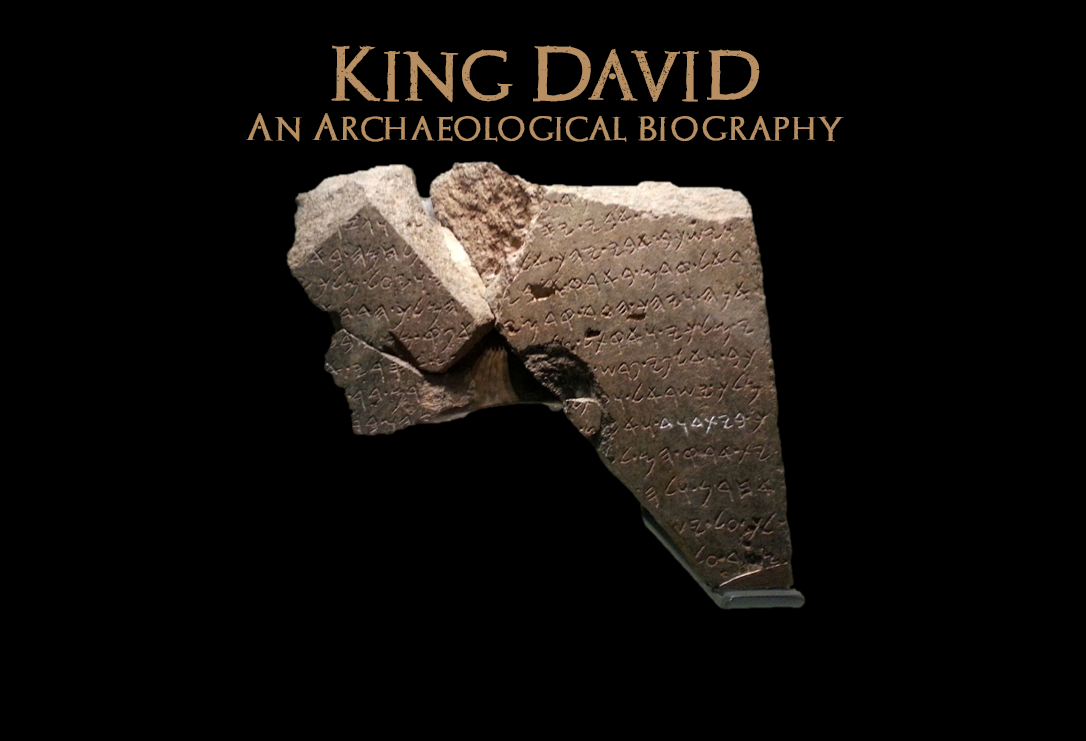
Image from The Bible Archaeology Report, January 17, 2020. https://biblearchaeologyreport.com/2020/01/17/king-david-an-archaeological-biography/
Second, the Bible is written by approximately 40 different authors spanning 1,500 years with no contradictions. Take two doctors living in the same year, 2020, and have them write two articles on the COVID 19 pandemic, and it will not take long to see different and contradictory views between the two. Now compare that to the 1,500 years and 40 different authors from all walks of life–that is the Bible.
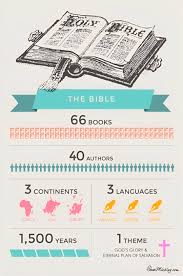
Image from a Facebook post from Biblical Creation posted December 26, 2025. https://www.facebook.com/1mill.creationist/posts/the-bible-was-written-by-over-40-authors-across-1500-years-on-three-continents-i/899961372689261/
Third, the earliest manuscripts of the New Testament is less than 30 years. For perspective, the next copy of Shakespeare’s works is 700 years later, yet many people do not question the authenticity or credibility of Shakespeare’s works. To illustrate, imagine that you wrote a biography of your life. Then, 700 years later, someone, using fragments of your biography, recreated what they beleived to be your biography. Sounds like there would probabaly be several mistakes, right? This is what we have of Shakespeare. On the contrary with the New Testament, the earliest copy was less than 30 years. That gives plenty of room for first-hand accounts and eye witness testimony to be recorded accurately. In addition to this, there are only around a dozen of offical copies of Shakespeare’s works, but the New Testament has over 20,000 official copies, without contradictions.
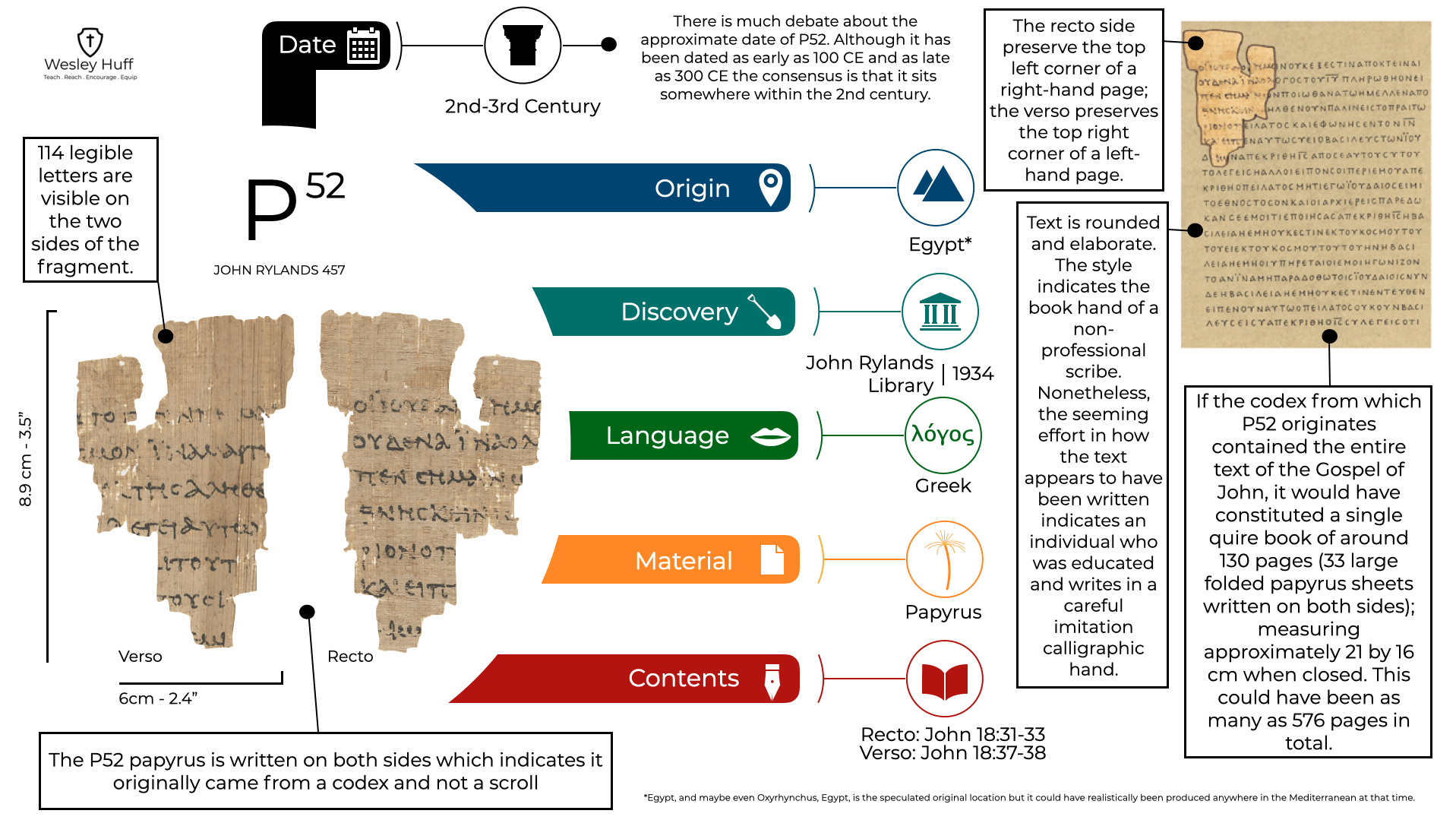
Image from Wesley Huff, published May 6, 2026. https://www.wesleyhuff.com/blog/2021/5/6/the-earliest-new-testament-manuscripts
Lastly, one’s personal testimony on how God’s living word, what the Bible is often called within Christian circles, has impacted their lives should be considered evidence of the Bible’s transformational work due to the truths it contains.
Postmodernism
In a postmodernist society, the U.S. faces a challenge with all ages with the concept that truth is relative. It is an unlivable worldview. If people want to believe that only certain laws apply to them because that is their truth, then our legal system breaks down and society crumbles. One’s truth on mathematics could lead to fraudulent IRS submissions. One’s thought on the truth of gender has led to women being seen as something to make fun of and mock by putting on dresses and makeup, removing the uniqueness of both man and woman as God has created. Truth can be known. People have made fancy religions/worldviews that simply cry out that they want to be their own god because people do not like the thought that they are not in control. Instead of seeing the lack of control as a negative, the Christian rejoices that there is a caring and perfectly just God that is soverign overall, but one cannot come to believe in this God without recognizing that the Bible is a credible source of truth.
- Paul Gould, Travis Dickinson, and Keith Loftin, Stand Firm: Apologetics and the Brilliance of the Gospel (Nashville, TN: B&H Academic, 2018), 203. ↩︎
- Ibid., 211. ↩︎
Bibliography
Beck, John A. “The Case for Biblical Archaeology: Uncovering the Historical Record of God’s Old Testament People.” Journal of the Evangelical Theological Society 64, no. 1 (03, 2021): 166-8, https://www.proquest.com/scholarly-journals/case-biblical-archaeology-uncovering-historical/docview/2549295769/se-2.
Parker, D. C, and Inc NetLibrary. An Introduction to the New Testament Manuscripts and Their Texts. Cambridge, UK ; Cambridge University Press, 2008. https://search.ebscohost.com/login.aspx?direct=true&scope=site&db=nlebk&db=nlabk&authtype=shib&custid=liberty&AN=234391.
 Japan
Japan 
Leave a comment